 Mini-Converters
 Digital Recorders
 Mobile I/O
 Desktop I/O
 Color
Color
 Streaming
 IP Video/Audio
 Frame Sync
 openGear
 Routers
 Recording Media
 Developer
 Software


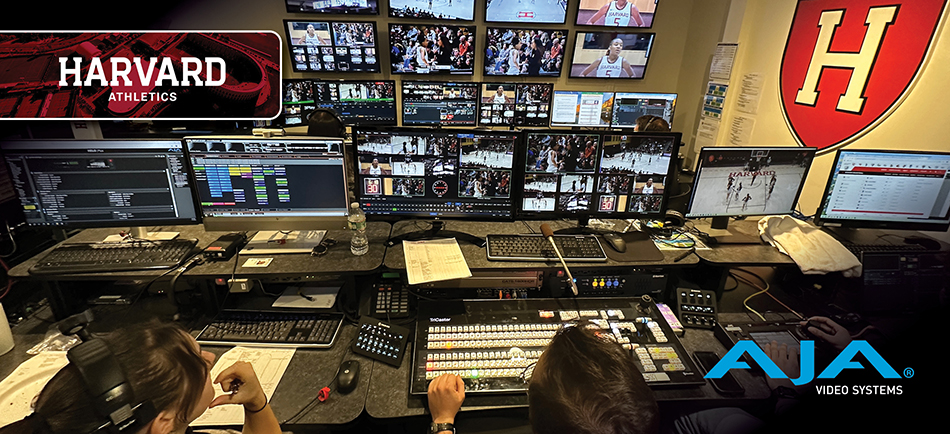
Harvard Athletics: Building Reliable Sports Storytelling Workflows that can Scale
July 23, 2026
Share
 Email
Email
When producing live content for more than 40 Division I sports teams, downtime isn’t an option, as it pulls audiences out of the moment. For Imry Halevi, Sr. Associate Director of Athletics for Content and Strategic Communications at Harvard, that means low-latency, high-quality streaming is the priority, whether broadcasting to ESPN, the Harvard website, or social media. Equally important, however, is continuously evolving the university’s storytelling capabilities to align with audience behavior shifts while preserving Harvard’s rich history.
As the person responsible for delivering on both fronts, Halevi understands the importance of deploying dependable, flexible equipment, which is why he leverages AJA gear where possible in the chain. In our latest customer interview, he reveals the workflow he’s built over the last 14 years at Harvard, and how AJA gear has saved him countless hours and headaches.

What is your role?
I oversee sports broadcasts and video production for the Harvard Athletics website and social media channels, among other communication needs. A lot of my time is spent managing a large team and researching and analyzing what other teams are doing in collegiate and professional sports. I’m always thinking about the bigger picture and identifying new technology that can improve how we tell Harvard’s story and preserve our history.
Since you’ve been at Harvard, how has your content production strategy evolved?
The journey certainly hasn’t been linear. We used to host content in one location, like YouTube, and direct people there. Now, with people’s attention being scattered across platforms, we identify where they are and bring the content to them on Instagram, Facebook, TikTok, YouTube, our website, and ESPN – tailoring the product to each viewing platform. For example, while long-form content works great on YouTube, shorter videos get more engagement on Instagram and TikTok, so we edit the content to suit. We’ve also experimented a lot recently with 9:16 for social platforms.
Scoreboard content is another area where we’ve evolved our approach to content production. Harvard has five video boards across our football stadium, basketball, track and hockey arenas, and aquatics center. In the last few years, we’ve worked with fans on what makes a good experience in each venue and how our video board content plays into that.
How big is your team and how much content are you producing?
On the multimedia side, I manage six full-time people, but we train over a hundred students and local college graduates to run various aspects of our broadcasts. As an educational institution, our mission is to teach the next generation of broadcast professionals right here. We produce about 325 broadcasts a year for 40 teams, plus some live post-season competitions and 500 pieces of edited content. While our live broadcasts are largely 720p 59.94, we’re exploring 1080p, and we use an end-to-end 4K pipeline to deliver our edited content.
Our content is not only designed to highlight live sports, but the people and students behind them. For instance, our team might create a video spotlight on the sailing team skipper, but illustrate how she’s also doing vaccine lab research, or create a video on a basketball forward who is also composing music. There are so many interesting stories that make Harvard special, and we make them discoverable to recruits, students, professors, coaches, and parents.
What does your live production setup look like?
We have two central control rooms, each capable of producing two shows simultaneously, so we could produce a basketball game for ESPN and an in-arena video board show, while also producing a soccer game and a field hockey match. If we produce more than four events at a time, we’ll deploy one of our portable flypacks. We run on NDI, so production is distributed.
Why did you choose NDI?
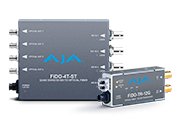
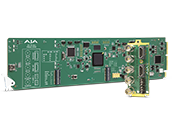
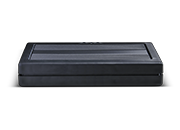
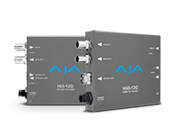
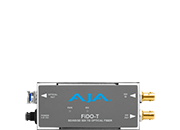
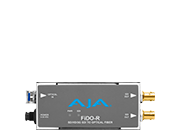
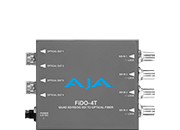
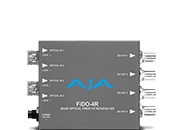
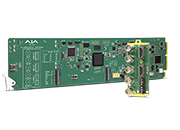
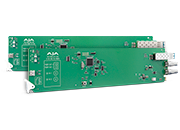
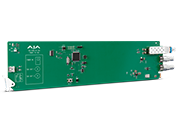
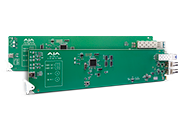
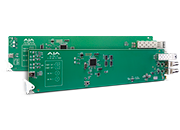
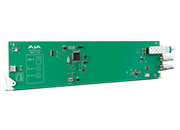
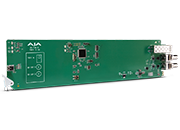
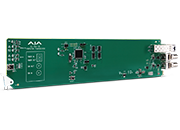
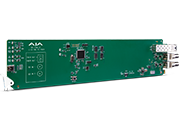
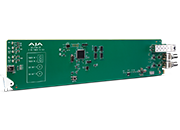
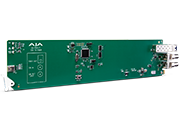
NDI lets us use our existing network without having to add more capacity, and for 720p streaming, it looks great. We may have NDI devices at the edge, but we still use SDI to get to our monitors or for fiber conversion, which is where we rely on our AJA BRIDGE NDI 3G and FiDO Mini-Converters.
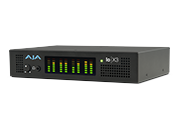
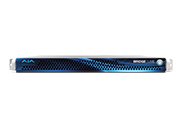
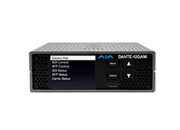
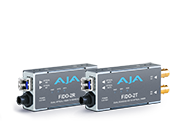
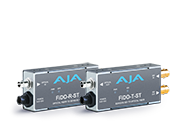
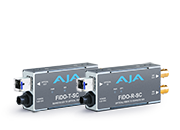
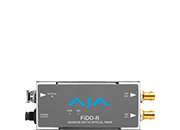
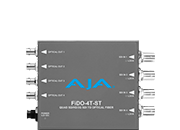
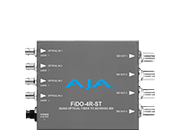
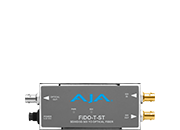
If I’m producing a game at the football stadium and I have an SDI source that I need to distribute via NDI, I just send it to the BRIDGE NDI 3G. The fact that I can preview everything with 16 windows has been helpful for our workflow. We also have a ton of AJA FiDO fiber converters in a rack, which gives us a convenient way to convert fiber to SDI on copper for use on our switchers.
What other infrastructure tools do you leverage for these productions?
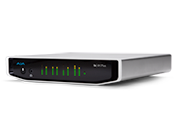
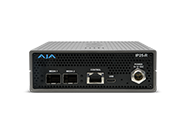
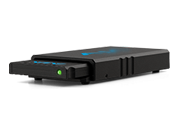
HELO Plus H.264 streamers and recorders are a big part of our pipeline. We have 26 units in total that stream all the time. For most live broadcasts, we use them to stream everything twice; one feed to our international streaming platform and another to our live clipping and tagging platform, which we use to share highlights on social media. For audio recording, the audio meters in the interface and on the physical device are huge; we love being able to see the audio levels right away.
Confidence recording on our in-venue video boards, ribbons, and center hungs is another area where we use HELOs. The layout feature lets us view a recording of different in-venue video displays at the same time, so we can see an SDI feed on the center hung and an HDMI feed of the ribbon board, then use the feature to make them look nice and work well with each other - the HELO Plus essentially becomes a small but powerful switcher. It's been a lifesaver for us, providing quality recordings without us having to spin up a full-blown switcher.
The remote control aspect of these devices also helps us with REMI for tennis and squash. During the season, we’ll produce and stream 12 simultaneous matches across six tennis and six squash courts. HELO Plus systems allow us to easily monitor, start, and pause recording and streaming remotely. AJA U-TAP is another tool we lean on heavily.
Tell us more about how you leverage AJA U-TAP.
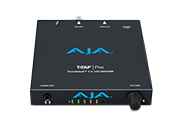
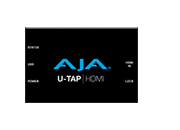
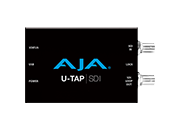
We use U-TAP in a couple of ways. We use TikTok Studio software on Windows to send our professional feed to the platform, but we need to get our SDI video to a Windows computer for it to work, which U-TAP does. It’s also useful for remote commentary. Rowing races start early in the morning, so commentators often work from home on Zoom. To get a return feed into Zoom, we set up Zoom on a computer and connect the U-TAP, so commentators can see and hear the production and know what they're calling.
How much of your workflow is remote?
When I started here, everything was on-site. We’d take all our gear, walk over to the venue, and set everything up. Today, we’ve got a remote on-campus workflow between our central control rooms and the game locations, with everything REMIed to the control room. Same for our off-campus events, like rowing in New Jersey, skiing in Vermont, and sailing on the Charles River. Those productions still originate from our campus control rooms, with camera operators often the only ones having to travel.
What’s next for your team, and what role do you see AJA gear playing in that future?
Our goal is to continue making our storytelling more engaging for audiences while using our resources more wisely. We’re always looking at new ways to create content that better conveys what makes the university so unique. We anticipate AJA gear will continue to play a key role here. People depend on us to do our job, and we depend on equipment to get the job done, so the reliability AJA gear provides is paramount. We never have to worry about it stopping mid-broadcast. Our older gear runs frequently, and it just keeps working.
About AJA Video Systems
Since 1993, AJA Video Systems has been a leading manufacturer of cutting-edge technology for the broadcast, cinema, proAV, and post production markets. The company develops a range of powerful, flexible video interface and conversion technologies, digital video recording solutions, and color management, streaming, and remote production tools. All AJA products are designed and manufactured at our facilities in Grass Valley, California, and sold through an extensive sales channel of resellers and systems integrators around the world. For further information, please see our website at www.aja.com.
All trademarks and copyrights are the property of their respective owners.
Media Contact:
Katie Weinberg
Raz Public Relations, LLC
310-450-1482, aja@razpr.com
Products Used
-
BRIDGE NDI® 3G
-
HELO Plus
-
U-TAP HDMI
-
U-TAP SDI