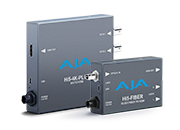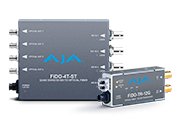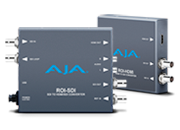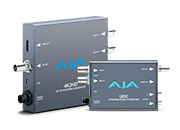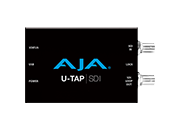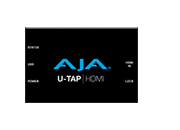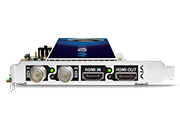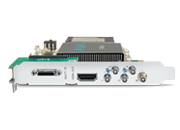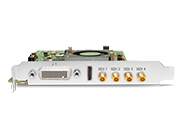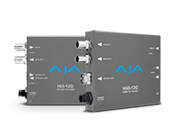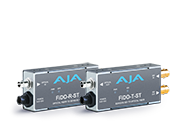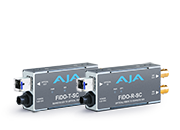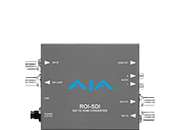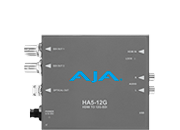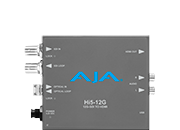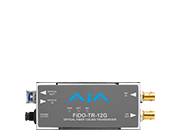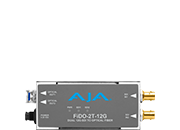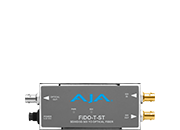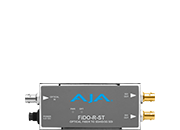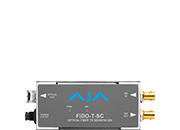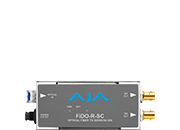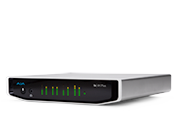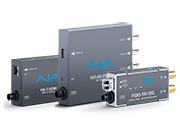
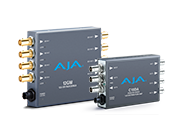
AJA's Mini-Converters are well known worldwide for their reliability, robustness and power across a range of conversion needs. Select the appropriate category for your in field or studio needs.
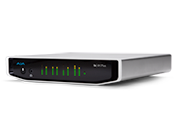
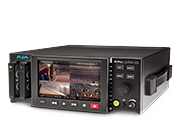
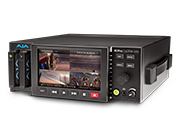
The Ki Pro family of digital file recorders and players cover a range of raster, codec and connectivity needs in different formats suited for the field, equipment rack or facility.
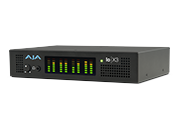
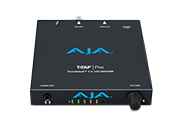
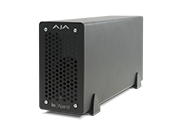
Explore AJA’s solutions for editing, color correction, streaming and much more in the field or flexible facility environments with the Io and the T-TAP Pro products.
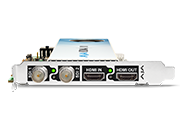
From Composite, Component, 3G-SDI, HDMI to Broadcast IP, AJA desktop solutions provide you the needed I/O for any given project. Explore the KONA desktop I/O family to learn more.
Advanced tools for managing the latest color formats in live production, on-set, post, and delivery.
AJA Streaming solutions include standalone and modular I/O devices, supporting the latest streaming software, codecs, formats, transport protocols and delivery platforms.
AJA offers a broad range of IP video tools, supporting ST 2110, NDI, Dante AV, AES67 and the latest streaming formats.
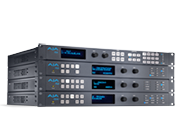
AJA’s FS range of 1RU frame synchronizers and multi-capable converters cover your needs from SD to 4K, 1 to 4 channels of HD support and advanced workflows including real time HDR transforms, with the incredible FS-HDR
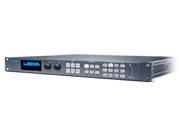
openGear and AJA Rackframes and Converters for convenient rack based conversion, DA and fiber needs.
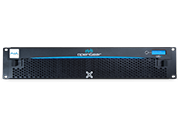
KUMO SDI routers range from 16x16 to 64x64 with convenient control and salvo recall from the KUMO CP control panels.
AJA offers a range of SSD-based media, designed for the rigors of professional production. Docks provide the latest Thunderbolt and USB connectivity.
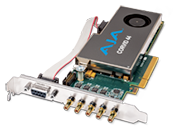
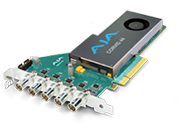
The Corvid lineup of developer cards and SDK options for KONA and Io desktop and mobile solutions offers OEM partners’ a wealth of options. Explore to learn more.
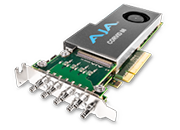
AJA offers a wealth of free software for control, configuration, testing and capture and playback needs.
Distribution Amplifiers, Muxers, DeMuxers, Genlock, Audio Embedders and Disembedders; all in a robust reliable form factor for your infrastructure needs.
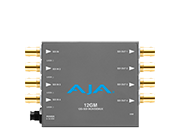
Choose HA5 Mini-Converters for conversion from HDMI to SDI and Hi5 Mini-Converters for conversion from SDI to HDMI.
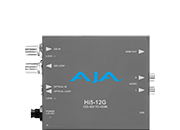
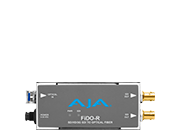
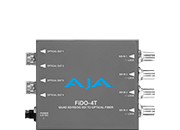
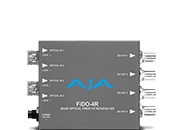
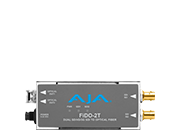
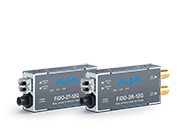
AJA FiDO fiber converters expand your range all the way up to 10km with Single Mode. Transceivers, transmitters and receivers available with SC or ST connectivity and LC Multi-Mode or Single Mode options.
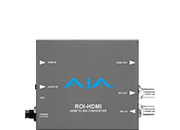
Scan Converters for Region of Interest extraction from HDMI, SDI, DVI, and DisplayPort.
Mini-Converters ideally suited for up, down or cross-conversion for raster or scan conversion needs.
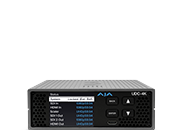
Bridge SDI or HDMI to Broadcast IP and back with AJA IP Mini-Converters
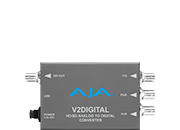
Convert to and from Digital or between Analog Video standards.
openGear Frame Syncs, DA's, and Audio Processing
Supporting the Latest SDI and Fiber Connectivity
The latest press releases on the most exciting product releases and top news stories from AJA.
Download the latest firmware, software, manuals and more to keep current with the latest releases from AJA.
AJA is dedicated to ensuring your success with our products. Technical Support is available free of charge and our team will work with you to help answer questions or resolve any issues.
If you have an AJA product, please register on this page. Having your registration on file helps us provide quality Technical Support and communication.
Closed captioning, the process of converting audio content into synchronized on-screen text, may have been conceived to enhance accessibility for the deaf and hard of hearing, but its advantages today extend beyond accessibility. Closed captioning improves audience comprehension, facilitates content engagement in noisy environments, supports content translation and localization, and provides search engines with textual cues for indexing.
Technical standards and specifications governing its implementation include CEA-608, CEA-708 and OP-47, as well as SMPTE ST 2110-40, which specifies how ancillary data, including closed captions, is transported over IP networks. SMPTE ST 2110-40 defines how this data is encapsulated and synchronized with the associated audio and video essence, ensuring accurate timing and delivery.
Closed captioning is a consideration for nearly every aspect of the production and delivery chain, from caption creation and encoding to distribution and playback. Equipment such as caption encoders and decoders, software tools for caption authoring and conversion, and considerations for timing and synchronization are all integral components of the workflow. This guide offers an in-depth exploration of closed captioning, examining its benefits, outlining technical standards and specifications, clarifying key terminology, and providing a practical guide to the closed captioning workflow.
Closed captioning converts spoken dialogue into text displayed on screen. Although it began as an accessibility feature, the practice has evolved into a global communication tool that improves the viewer experience. Learn more about closed captioning and its origins.
The captioning standards CTA-608, CTA-708, SMPTE ST 2110-40 and OP-47 represent different approaches to displaying text synchronized with video content. Find out more about each standard and their various roles in modern production and delivery workflows.
Closed captioning, put simply, is the process of converting the narration, dialogue, music and sound effects of a video production into text that is displayed on a screen. When the idea of making television broadcasts accessible to people who are deaf or hard of hearing was proposed in the United States around 1970, nearly all live and recorded video content was viewed on the television in the family room, so closed captioning was developed as an enhancement to broadcast TV technology.
In 1970, the United States’ National Bureau of Standards (NBS) began experimenting with closed captioning enabling technologies. NBS collaborated with broadcasters, who developed encoding equipment and helped refine the captioning format. After some test broadcasts in the 1970s, U.S. broadcasters began transmitting captioned broadcasts in 1980; at the same time, captioning decoders became available for home viewers to purchase, allowing them to view closed captioning on programs that offered it. In the early 1990s, it became law in the United States that TVs had to ship with a decoder enabling them to display closed captions.
With the emergence of the internet and the proliferation of screens and content platforms since then, closed captioning has become an essential part of program delivery, from traditional broadcast to streaming platforms. From the perspective of viewers, content creators and providers, and technology manufacturers, closed captioning has become a requirement. Audiences expect it will be available for nearly all content they consume, and content creators and providers expect any hardware or software tool they use for video to support it.
With closed captioning now a commodity, viewers have found that its benefits extend far beyond its origins as an accessibility feature offering text-based representation of spoken dialogue; for instance, it can remove language barriers, expanding the reach of programming. It’s likely many hit international series would not have trended on OTT (over the top) platforms like Netflix and Hulu had captions not been available to translate the dialogue into languages spoken by viewers around the world.
Viewers now seamlessly embrace captions, opting to watch foreign-language programs with their original audio while reading subtitles. Many find hearing the original dialogue allows them to access a character’s emotions more easily, even if they don’t understand the language. The spoken dialogue carries the emotion, while the closed captioning text carries the message.
Subtitles/closed captioning can also help viewers who are learning a new language or expanding their knowledge of their native tongue. They help viewers better understand what is being said, especially if someone is speaking quickly, uses a dialect, has a strong accent, or uses slang or other unfamiliar terms. Many people watch television with subtitles most or all of the time, regardless of where or what they are watching.
Closed captioning is also useful for watching content in loud environments or public spaces, enabling viewers to understand the dialogue without turning up the volume. In fact, it’s common to watch social media and other streaming content on platforms like TikTok and YouTube without any volume at all.
The internet has spawned another benefit of closed captions: subtitles improve the SEO (search engine optimization) of video content. Text helps search engines rank videos higher by making content easier to categorize.
Delivering closed captions requires a nuanced understanding of the different captioning formats and technical specifications, which you can read about here.
Closed captioning is the process of displaying text over an image to provide dialogue, language translation or interpretive information synchronized with program audio. Both closed captioning and subtitling are typically used as a transcription of the audio part of the program, sometimes including descriptions of non-speech elements such as sound cues and music.
When transmitted, closed captions are encapsulated (“embedded”) into the video stream. This technique was initially standardized for broadcast television with CEA-608 and CEA-708, two closed captioning standards that remain widely used today. With them, captions are written directly into a video. In contrast, more recent standards like SMPTE ST 2110 take a different approach, storing closed captioning data as metadata separate from the video. During playback, this captioning information is synchronized and delivered alongside the video stream. Let’s take a closer look at each:
CTA-608, also known as Line 21 captions, is an older standard for closed captioning used primarily in analog television broadcasts. Developed in the 1970s for NTSC broadcasts, CTA-608 encodes caption data on Line 21 of standard-definition NTSC signals. Formerly known as CEA-608, the standard was renamed CTA-608 after the Consumer Electronics Association (CEA) became the Consumer Technology Association (CTA) in 2015. A similar name change occurred with the CEA/CTA-708 standard.
CTA-608 offers limited customization options, with no ability to change the font face, text size and caption positioning on screen. The 608 standard provides two services in Line 21, allowing for two language options simultaneously (typically English and Spanish). 608 is compatible with both analog and digital televisions, ensuring its longevity even today, though its use is declining in favor of more advanced standards like CTA-708.
CTA-708 was developed as the closed captioning standard for ATSC digital television broadcasts and became available prior to the digital switch in 2009, which required new methods and standards for closed captioning encoding and decoding. Unlike CTA-608, CTA-708 closed captioning is not inserted into Line 21 like an NTSC composite signal. Instead, the CTA-708 data is transmitted via MPEG-2 video streams. Importantly, however, CTA-708 closed captioning includes a digital form of the CTA-608 data for backward compatibility with older analog gear.
As opposed to the limited presentation options of CTA-608, CTA-708 supports the use of various fonts, sizes, colors and styles, which can be controlled by the user. It also allows greater flexibility with regard to caption positioning on screen, including use of the full 16:9 width of HD video. Support for Unicode characters is another key differentiator, enabling the display of Chinese, Japanese, Korean, Arabic, Hebrew, and other languages and special symbols, whereas CTA-608 was restricted to Latin-based characters. Furthermore, CTA-708 supports many more simultaneous caption tracks, extending the multilingual capacity of closed captions. It’s important to understand, however, that while CTA-708 is a more modern, flexible format, it is often used to simply carry CTA-608 data.
SMPTE ST 2110 is a suite of standards developed by the Society of Motion Picture and Television Engineers (SMPTE) that defines how to transmit uncompressed video, audio, and ancillary data over IP networks. ST 2110-20 standardizes the transport of uncompressed video over IP networks, while ST 2110-30 does the same for audio. ST 2110-40 specifies the transport of ancillary (ANC) data over IP networks in professional media applications. Ancillary data passed through a ST 2110-40 stream not only supports closed captioning but also subtitles, timecode, and other forms of embedded data associated with the primary video signal.
In addition to describing how ANC data is encapsulated and transmitted alongside video and audio streams, SMPTE ST 2110-40 maps ANC data packets into RTP packets and enables them to remain synchronized with the video and audio essence streams. Unlike traditional SDI, it allows for the transmission of ANC data as a separate stream from the video and audio, enabling independent manipulation of each element. By breaking ANC data into “essence streams” separate from the video, broadcasters and others working with professional media may more easily add or modify captions, subtitles, and other metadata at different points in the workflow.
Before the development of SMPTE ST 2110-40, ANC packets – whether closed captioning or similar ancillary information – could not be separated from the video signal. Adding closed captioning to an SDI signal required you to send the video into a closed captioning encoder, add the captions, and then output the video again. To add another ANC service, you had to send the video into another device, add the service, and send the video out again.
With SMPTE ST 2110-40, the video signal can be broken into separate video, audio, and ancillary data components, enabling each element to be routed, processed and managed separately on an IP network rather than being bundled together as a single stream like in traditional SDI systems.
In a SMPTE ST 2110 IP environment, a production output may be sent to a workstation with an I/O card like KONA IP25 connected for seamless network integration. Software on the computer hosting the KONA IP25 card can generate the needed captions, and the KONA IP25 card can transmit a caption-filled ST 2110-40 stream (and if desired a ST 2110-20 video with captions burned into the active video) to join the original video and audio essences in the network. To add closed captioning or other ANC services, it’s no longer necessary to send the video through the closed captioning encoder. Instead, the captioner device creates captions and sends the SMPTE ST 2110-40 captioning packets into the network. Without touching the production ST 2110-20 video, captions have been created and all the essences can now be utilized to deliver the final product.
OP-47 (for HD) and OP-42 (for SD) are closed captioning standards used in 50 Hz countries that allow text and rudimentary graphics to be carried in the vertical blanking interval (VANC) area at the top and bottom of the video frame. They transmit closed captioning data as numbered pages of data that can be called up using a remote control. Despite its circa-1970s origins and the rise of the internet, select television stations in Europe continue to provide teletext services, accessed most often through dedicated applications or web interfaces. However, it’s considered outdated by most and has largely been replaced by online information sources.
There are a number of concepts related to closed captioning that require a grasp of subtitling, ANC packets, and more. Explore these topics in detail and learn more about the challenges and opportunities they present to professionals in the field.
When establishing a workflow, there are a host of closed captioning considerations to take into account. We break down the top three, from ensuring your gear supports the necessary ANC data to verifying compatibility with appropriate captioning standards. Find out more.
Closed captioning has specialized terminology that professionals need to understand. Continue reading for a glossary of terms and phrases, from subtitles and closed captioning to ANC packets and HDMI.
Whether you are producing or delivering content for live or on-demand viewing, closed captioning metadata will likely be involved. This means all the various tools you use, from capture through postproduction and delivery, must support the ancillary data you need, such as closed captioning, embedded timecode, or SCTE triggers. Check out this roundup of key considerations:
Failure to do this may mean you need to add a peripheral product into your signal chain to achieve the required functionality, potentially adding additional delay to the signal. Carefully spec out every piece of equipment, from digital video recorders, routers and Mini-Converters to openGear solutions, IP video and streaming solutions, to ensure proper support.
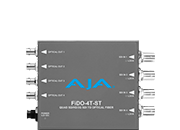
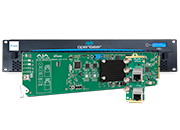
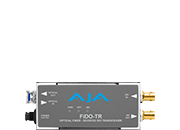
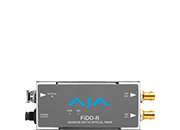
Most AJA products support the pass-through of closed captioning metadata, including KONA IP25, Ki Pro Ultra 12G, FiDO optical converters, SDI DA Mini-Converters, KUMO routers, BRIDGE LIVE, and openGear cards like OG-12GDA-2x4, OG-3GDA-1x9, OG-3GDA-2x4, and the OG-FiDO series.
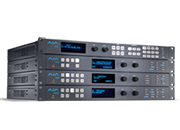
While CTA-708 is the more common closed captioning standard today, its implementation does not preclude the use of the older CTA-608 format. Some video workflows may require conversion between both, particularly when an available device does not support one or the other captioning “flavor.” Tools like AJA FS-HDR, FS4, FS2, and FS1-X can help fill in any gaps, enabling conversion between CTA-608 and CTA-708 captions in either direction.
These products fully convert CTA-608 to CTA-708, ensuring that the CTA-708 packets use native syntax decodable by all HD television sets. Some SD-to-HD upconverters perform only the simpler CTA-608 encapsulation operation, which can lead to interoperability problems with HD televisions and equipment that are designed to decode native CTA-708 syntax. Similarly, all of AJA’s FS models support 608 and 708 pass-through while performing their specific conversions. Furthermore, teletext captions are preserved when passing through PAL and 625i/50 formats on all models, and FS-HDR will even maintain caption data on conversions to/from SDR and HDR.
If using a product to pass video into HDMI, remember that the product must be able to embed the closed captions into the HDMI as a visual ANC component. If transmitting HDMI to HDMI and closed captions are needed, it’s important to consider the following: In a pure HDMI workflow, closed captions will need to be delivered to the desired HDMI encoder to embed closed captions. Only one HDMI encode can embed the closed captioning. When an upstream HDMI device has already embedded closed captions into an active video signal, a downstream HDMI device cannot add another layer of closed captions. Attempting to do so would result in two sets of captions being overlaid and displayed simultaneously.
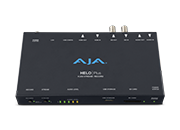
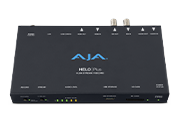
Outside of the AJA solutions already mentioned and included on the closed captioning solutions homepage, AJA offers a host of other products designed to support closed captioning needs across the production chain, from the HELO Plus H.264 streaming and recording device, to the Desktop and Mobile I/O families, and Developer Products. Dive deeper into each solution’s closed captioning functionality on each product’s respective page.